Showing posts with label Sundance London. Show all posts

Thursday, 2 May 2013

Sundance London 2013: In A World... Review


Director/Writer: Lake Bell

Starring: Lake Bell, Fred Melamed, Demetri Martin, Michaela Watkins, Ken Marino, Rob Corddry, Alexandra Holden, Nick Offerman

Synopsis: Since the death of industry legend Don LaFontaine the position of the new voice-over star is open. Daughter to a highly-regarded trailer narrator, Carol (Bell) wants to follow in the footsteps of the greats by competing for a highly-coveted voice-over job on a new and popular film trailer. 

Less known over here in the UK, many British audiences will still appreciate the basis of In A World... – the infamous voice-of-God that plays over various movie trailers. “In A World...” was the catchphrase of Don LaFontaine (watch this Youtube video for a brief, and hilarious, overview of Don’s career) and has defined that side of the movie industry. Lake Bell’s film follows a group of announcers trying to fill the man’s shoes by competing for a trailer job of Hunger Games box-office proportions.

The underdog story – in which Bell’s Carol plays the underdog – is a clichéd and formulaic narrative. In this regard, you can easily foresee the ending of In A World... leaving it less original than it thinks it is. Bell’s writing is sharp at points yet never of the standard required for cult or commercial success. The concept is an amusing alternate view of Hollywood, but still bogged down by stock characters and plot.

Bell as the writer, director and lead has not let the pivotal positions go to her head and, if anything, her part seems to be least memorable. The side story of her sister and brother in-law, played by Michaela Watkins and Rob Corddry, respectively, develops the story better than most arcs (Corddry never better and mightily pushing the film forward). It’s then the job of Fred Melamed and Demetri Martin to provide the majority of laughs.

Bell does pen herself some great zingers though it’s usually at the expense of others (Valley Girls, for example) rather than an isolated achievement. She’s cute and clever – a great feminist figure in the film and out – surely to garner greater attention after this. However, there’s nothing that special about her writing or screen-presence (as harsh at that seems). The best thing to take from In A Wolrd... is the ability to compare it to her progression in the film industry and her future auteur efforts.

A moderately entertaining directorial debut with solid editing and casting. Some may find the fresh perspective on jobs within the film industry rousing and funny, but there are far better examples of it.

***
By Piers McCarthy. Also posted on LiveForFilms

Sundance London 2013: Touchy Feely Review


Director/Writer: Lynn Shelton

Starring: Rosemarie DeWitt, Ellen Page, Josh Pais, Scoot McNairy, Alison Janney, Ron Livingston

Synopsis: When a massage therapist suddenly finds herself repulsed by human skin, she finds her romantic relationship and work-life in ruins. Meanwhile, her brother, a dentist, undergoes a life-altering bout of success in his practice. Crossing back and forth between the stories, Touchy Feely explores the subjects of interaction and progression.

Lynn Shelton’s canny ability to write and visualise awkward human interaction has given her a string of critical successes. Humpday and Your Sister’s Sister were excellent character-pieces, lovingly crafted with humour and heart; it then becomes a disappointment to find her latest, Touchy Feely, plain dull.

Scratch beneath the surface of Touchy Feely and there is a rich set of themes (humanity’s obsession with contact, desire and repulsion, and the idea of spirituality or intuition). Sadly, these are ideas too profound to explore in an 80 minute comedy/drama and Shelton’s attempt to investigate drains the film of life.

It’s a film packed with too many characters, motifs and story arcs – having a damning effect on the wonderful cast. All graciously at ease with their minor characters, it appears none of the fine character actors employed for the film saw an issue with screen-time. Contemporary favourites such as Alison Janney, Ron Livingston and Scoot McNairy have all-too brief moments (especially Livingston) but fail to make an impression. If you see any of the other cast in different films, you (usually) walk away adamant to seek out more of their work. McNairy is fast becoming a star (or at least should be) but it’s doubtful that this film will have cinemagoers intent on finding out his filmography, as he’s barely written in efficiently.

In the lead as Abby, Rosemarie DeWitt is allowed a decent amount of screen-time, as well as her on-screen brother played by Josh Pais. As DeWitt has continually found herself part of smart, funny indie films you look toward the lesser-known Pais. He plays the nervous, withdrawn type well enough to get him typecast, with perhaps the only laugh out loud moment where he attempts to relax for the first time. It’s his arc that happens to have the better material, leaving the likes of Ellen Page (as his daughter) and newcomer Tomo Nakayama (“cured” by Pais’ dentist and encouraging a wealth of new clients for the practice) in the shadow of the only appealing plotline.

An ensemble of some of the best actors around given little to do with material that feels so very flat after Shelton’s last two films. Call it a lack of artistic vigour but one should hope that this isn’t the beginning of a downward spiral for the writer/director.
**
By Piers McCarthy. Also posted on LiveForFilms

Sundance London 2013: The Summit Review


Director: Nick Ryan

Writer: Mark Monroe

Synopsis: During a climb to the summit of K2 in August 2008 11 out of the 24 climbers tragically died. The Summit looks at the expedition of 2008 and also compares it with the 1954 attempt made by Walter Bonatti and others.

It’s a struggle to criticise the editing of The Summit after it was awarded the Documentary Prize for Editing at Sundance (US). Nevertheless, even with this accolade it should not rule out a judgmental analysis of its structure. The Summit is incredibly engaging, with reconstructions of the event so realistic you wonder how they were accomplished. But, even with its edge-of-your-seat story-telling, there still remains the jarring arrangement of the tale(s).

Following most of the 24 climbers’ stories is a tricky task to pull off yet director Nick Ryan manages it well. It makes for a much more absorbing film to watch – having recollection upon recollection to grab your attention. Despite all this, though, the chronology of the film is a mess. We begin by reading about the deaths of the 11, onward to the interviews and reconstructions. In between scenes is a chronicle of Walter Bonatti’s successful expedition in the ‘50s. Bonatti’s scenes are placed so oddly within the narrative that his account is often confusing (with names and dates being lost in the viewer’s mind once it’s cut away from). The film then recaps information already processed (such as Ger McDonnell’s story told twice over) and rewinds itself to show another perspective that barely differs from the main outline.

Past the dodgy formation of scenes is a thought-provoking film questioning so many elements of humanity. At the heart of this exploration is the topic of ethics. Up on the mountain you have to look out for yourself lest you expire; so many of the stories show the struggle and aftermath of these decisions. Partners, lovers and friends in amongst the climbing crew see or suffer loss – each interviewee trying to articulate these consequences of climbing. Pemba Gyalje Sherpa, one of the survivors, adds the most to the documentary – one who’s enduring experience on K2 has given him an elucidate attitude on the perils of it all.

Certainly a documentary to provide shock and drama (and similar to the terrific Touching the Void) but poorly constructed. Certain shots – emphasising the beauty and reason of climbing – warrant its cinematic enterprise though it’s nothing you need to rush out to catch at the cinema.

***
By Piers McCarthy. Also posted on LiveForFilms

Tuesday, 30 April 2013

Sundance London 2013: Upstream Colour Review

Director/Writer: Shane Carruth


Starring: Amy Seimetz, Shane Carruth, Andrew Sensenig, Thiago Martins

Synopsis: Kris (Seimetz) is kidnapped one night, drugged and forced into a life cycle of a microscopic presence. Along her tough and confusing journey she finds a kindred spirit also caught up in a wider sense of existence. The two support each other to piece together the fragments of their confused life.

If the above synopsis doesn’t inform you already, Upstream Colour is a very tough film to describe. With some viewers this will be its greatest facets, and viewed in the completely opposite way by others.

Sitting down for a Shane Carruth movie is the equivalent of Ergodic literature – a very demanding exercise in entertainment and perception. There are many illogical aspects to his work, yet it’s his ability to meticulous craft deep logic that he’s praised for. Following the story appears to be easy for the first 30 minute of Upstream Colour – a woman kidnapped, drugged and then victim to the insertion of a worm into her body. This worm has the ability to alter her entire biology, and is a fascinating concept for a story. It’s the science-fiction of Richard Matheson, with a subject that covers for more than one idea (in this case: drug use, subsistence and even the theory of everything). As Kris, the kidnapped woman, is freed of the worm of a series of bizarre days under its spell she finds she is now lost in what was her reality. This is where the narrative veers off to the cryptic, then convoluted further by the introduction of Jeff (Carruth) who appears to have been through the same trauma.

If your attention slips ever so briefly during the film you will lose some intrinsic piece of understanding. Every shot, sound and symbol has been carefully envisioned by Carruth and this is a wondrous achievement. He is using the cinematic form in every capacity and largely succeeding. Some shots that illustrate the microscopic essence of life are stunning – developing this overarching theme boldly and constructively. There are then interconnected images and sounds that are edited together with finesse; all exemplary in their edifice.

Going to the film with absolutely no idea of the story could lead to frustration as there are few clues to piece it all together in one. Give the film a few days to digest, watch the trailer, and take another stab at it and you should expect a more satisfying experience. Take the Walden; or Life in the Woods by Henry David Thoreau that is referenced continually – read the book, or delve into its ideals and you will discover more about Carruth’s reason for it (one stab in the dark: life at its most basic and the connection of living organisms to one another).

Carruth is in the director’s chair, at the writer’s desk, in front of the camera, composing the music, editing the scenes, and filming the remarkable cinematography – he is already an auteur, completely in control of his project, and Upstream Colour is his crowning glory. Albeit, this film is tough and often irritating with its audacious enigma, but it is refreshingly smart, able to generate thought and discussion.

****
By Piers McCarthy. Also posted on LiveForFilms

Sundance London 2013: Muscle Shoals Review


Director: Greg “Freddy” Camalier

Starring: Rick Hall, Wilson Pickett, Keith Richards, Mick Jagger, Aretha Franklin, the Swampers, Alicia Keys, Bono, Jimmy Cliff

Synopsis: Shedding a light on the relatively untold story of Muscle Shoals – a town in Alabama home to some of the greatest music ever recorded.

As the gravelly, iconic voice of Keith Richards utters – “it’s immortal...it’s in the grooves, man”. The “it” he’s referring to is the sound of Muscle Shoals – the soul and seminal quality of some of the best music ever etched into a vinyl record. For music enthusiasts they may already know the history and importance of Rick Hall and the titular area in the deep south of the US. Still, Muscle Shoals may impart some fresh information for those learned folk. And for those less acquainted with it all, this documentary will tell you everything you need to know.

Kicking off with a profoundly good choice of song – Wilson Pickett’s “Land of 1000 Dances” – the film immediately emphasises the power and vivacity of this music. Soundtrack is, without question, one of the film’s finest elements, but it’s how Camalier pairs it with an image that cements the doc’s magnetism. As you listen to the funk, soul and slow-jams all recorded in the magical studios of Muscle Shoals, you are also given photography of the surrounding area. The majority of the montage happens at the beginning, introducing you to the land that housed the whole story. The film will inspire many people to visit the landmark area with the cinematography being another component advertising the charm of the place.

As a handful of admired musicians continue to praise the locale from start to finish, the legacy can never be queried. Stories from Percy Sledge, Wilson Pickett, Aretha Franklin, Mick Jagger and Keith Richards (to name a few) about their successful stint in the studios prove Muscle Shoals’ significance. However, these interviews are not the key to the story – it is Rick Hall and the Swampers’ chronicle that gets the deserved limelight. Without those engineers, musicians, producers, and visionaries the world would be without some superb songs.

Being the mastermind behind this musical revolution, Rick Hall gets a healthy amount of screen-time. His stories of creative input (such as Hall writing Clarence Carter’s “Patches” after the death of his father) and quest for perfection are insightful, though some snippets feel superfluous. The Swampers have less to say themselves but, fortunately, are spoken about more frequently by others – they are another vital part to defining the music. As many won’t realise, the instrumental work behind so many of this wonderful rhythm and blues music was conducted by these white dudes. Nearly all of the interviewed artists enjoying pointing this out and rightly so; it speaks volumes about racial awareness, which becomes a rousingly investigated subject.

There is more that could be said about the tracks recorded in the Muscle Shoals studios but it would require an entire series of films. Camalier does a terrific job of diluting that extensive history without making it seem flat or lacking. One thing that the film would have benefited from would be the deletion of filler shots (contrived photography of Hall or the Swampers standing in certain spots of the town), replaced with old stock footage or photos. Overall, however, it is an awe-inspiring account with a host of well renowned interviewees thrilled to talk about that special place where the music “comes up through the mud”.

****
By Piers McCarthy. Also posted on LiveForFilms

Monday, 29 April 2013

Sundance London 2013: Metro Manila Review


Director: Sean Ellis

Writers: Sean Ellis, Frank E. Flowers

Starring: Jake Macapagal, Althea Vega, John Arcilla, Moises Magisa

Synopsis: A farmer, Oscar (Macapagal), his wife Mai (Vega) and his two children are struggling on the rice hills of northern Philippines. In hope of finding prosperity they move to the bustling metropolitan of Manila. As difficult as it is finding work, Oscar finally gets hired as an armoured truck driver/security. It’s a dangerous job that magnifies the criminality and corruption around him.

Cinematic vérité is a tough aesthetic to crack - it relies on believability in the work of fiction. Sean Ellis’ Metro Manila is one of the latest films able to capture a realism that’s practically faultless.

Even with a run-time that feels slightly longer than it should in sections, the majority of the editing and structure is brilliantly handled. Starting the film off with a brief but informative character and setting introduction, Ellis sets a tone that is intrinsic up until the last shot. It is mostly a migrant story, with some crime thriller integrated into it, reliant on the gloom of the dog-eat-dog world outlook. The crime aspect will not play into the film until half way, but from the start it's without a doubt that this is aiming to be a biting and elegiac drama (and nothing but successful with this aspiration). You are never without sympathy for Oscar and his family, achieved through a meticulous combination of writing and acting.

The role of the husband is commonly the one who brings home the bread. Oscar is the epitome of this persona, constantly striving to protect his family and give them all he can. Played with undeniable and awards-worthy elegance by Jake Macapagal, this is one of the most caring and altruistic husband/father characters since George Bailey. Oscar is the common man, both fearful and brave when it comes to facing harsh realities. As he becomes close to his armoured car partner, Ong (John Arcilla), he greatly highlights the decency of man aside the more flawed representation of humanity.

Also trying to help the family is Oscar’s wife Mai. As perilous as Oscar’s job can be, Mai is part of a seedy men’s club, having to strip away her innocence in order to get money. As the audience see the grim life Mai has to experience, Oscar can only imagine. In one heartbreaking scene, Oscar fights the tears away during a night out with co-workers - his tears mixing with the liquid of copious alcohol - thinking to himself of what Mai is concurrently having to do.

Moments of drama and upset are always touching – Ellis knowing how to create an atmosphere expertly. The scenes of tension and violence equal Ellis’ dramatic capabilities, with action ferocious and heart-pounding. The armoured car focal point could have been exploited with several stick-ups and hijackings but Ellis holds back, making the moments all-the-more nail-biting because of it.

Ellis’ direction, cinematography and writing (co-credited with Frank E. Flowers) are stunning, anchored by a sterling cast and location work. Nearly every element seems honed to perfection, with a superb ending to certainly leave a definite impression. Occasional scenes drag out but this is mostly an artistic and acting triumph.  

****
By Piers McCarthy. Also posted on LiveForFilms

Sunday, 28 April 2013

Sundance London 2013: The Kings of Summer Review

 
Director: Jordan Vogt-Roberts

Writer: Chris Galletta

Starring: Nick Robinson, Gabriel Basso, Moises Arias, Nick Offerman, Erin Moriarty, Alison Brie, Megan Mullally, Marc Evan Jackson

Synopsis: Fed up of their parents, Joe (Robinson) and Patrick (Basso) – with the addition of new friend Biaggio (Arias) – flee to the woods to start up a new life living off the land.

During those formative teenage years, many tired and tetchy youths have thought about hitting the road and leaving their parents behind. The notion itself is steeped in both danger and adventure, with some life-affirming stories, and others deeply melancholic. For the Funny or Die presents… director Jordan Vogt-Roberts and first-time writer Chris Galletta, the idea in their mind is that of pure delight. They show the oppressive environment of high school, and the gloom of being grounded; so when the boys take to the forest, you can sense the joy.

The Kings of Summer will continually be referenced in relation to Stand By Me and Superbad but it’s funnier than the former, and buries the latter in its wake. It sadly won’t always be viewed as an original due to the similarities in tone to past films, but it very well should be. The comedy is extremely well-balanced between the boys’ stories and the parents’, and the emotion is always touching and relatable. Written with such acerbic humour, and with a cast of characters that you wish you could watch for hours on end, this is the best teen comedy in existence.

Superbad, Role Models, American Pie et al are seen as the funniest teen comedies because they push the boundaries of decency. Laughing at what you shouldn’t is often staples of decent farce but there’s a limit to it. With the amount of raunchy comedies hitting cinemas nearly every month, it’s a pleasant surprise to see something that doesn’t require it. The jokes in The Kings of Summer are not always clean and the few low-brow ones will get the deserved laugh, but its’ the heightened wit and wordplay of the script that proves its quality. Furthermore, with people like Nick Offerman and Megan Mullally on top form, there’s laughter all round.

The parents who drive the kids to the woods are wonderfully realised – with snippets of very real characteristics such as mollycoddling and those outlandish or extreme, like consistently talking about the child’s supposed psychology every time they’re in his presence. Whenever any of the parental figures are on screen you are bound to be in fits of laughter. The same reaction often crosses over to the boys, who’s sojourn into the green land of Ohio is laced with slapstick and quips. Arias steals the show with his off-beat Biaggio character and this happens for him in all of his scenes. Robinson, on the other hand, is funniest when he’s in a battle of wits with his father. Having this one-on-one play from the beginning sets up Robinson’s charm, carrying on throughout (and expectantly will all through his career). The Joe character is then able to add heart and poignancy for the woods scenes later on the film, always with opportunity for humour whenever the film needs it.

The three lead actors may not have the capacity to steal the scenes away from learned actors such as Offerman and Mullally, but you cannot debate their comedic abilities. Arias, especially, has the makings of a true comic actor, with an appearance that makes you chuckle, and a clear sense of timing. Nick Robinson and Gabriel Basso are similarly funny (though Basso largely plays the straight man) but are more on hand to give the film the emotion for its coming-of-age genus. Minor (yet greatly cast) characters such as the police officers, a delivery guy, and Eugene Cordero’s ass-kissing hopeful son-in-law, constantly inject moments of side-splitting humour never letting you forget how well the screenplay is scribed.

Some scenes do play out in a clichéd fashion and occasional set-pieces can be seen from a mile off. Still, it is boasting some wonderful cinematography to side with the narrative proceedings, and endless quotable lines. It should become the new favourite for a generation – a few decades after the 80′s had Rob Reiner’s classic – brimming as it is with hilarity and heartfelt moments.


****
By Piers McCarthy. Also posted on
LiveForFilms 
Saturday, 27 April 2013

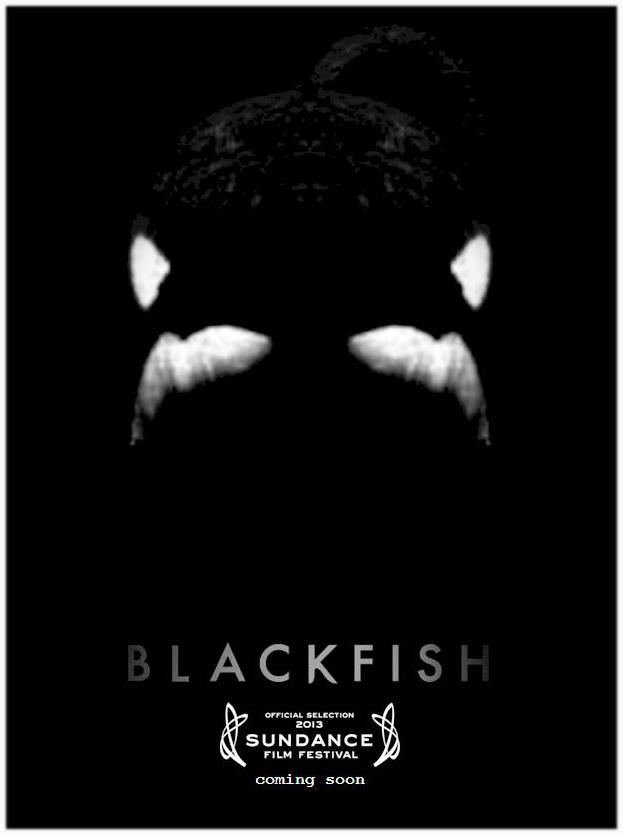
Sundance London 2013: Blackfish Review

Director: Gabriela Cowperthwaite

Synopsis: A chronicle of Tilikum, a killer whale captured and trained at SeaWorld, that killed several trainers in captivity.

The vast ocean is home to millions of creatures – some harmless, and others extremely dangerous. Whilst the Orca whale has not been known to harm many humans, Blackfish aims to show that in an unnatural environment, they may be prone to shake up the statistics.

The 30-foot-deep tanks at SeaWorld at Orlando, Florida apparently hold many secrets. In Gabriela Cowperthwaite’s documentary we are privy to the murky depths of those tanks and the horror that happened several times within them. Starting off with footage of what you believe to be an attack, Cowperthwaite illustrates the tension that courses through the film right from the beginning.

Arranged with talking head interviews, illustrated depictions of court cases, and collections of incredible footage, Blackfish glides through its run time, as elegantly as some of the Orca performances. To watch the whales is enjoyable enough, but with the added danger that attracts the “killer” connotation, you are captivated. Tilikum is a mysterious focal point, forever surprising both you and those that had the (mis)fortune of being in his company. Much like Nim in Project Nim and the grizzlies in Grizzly Man, there’s no telling to how the fierce creature will behave – waiting for the assumed action constantly has you on edge.

One misjudgment, perhaps, is the lack of discussion about Dawn Brancheau, the third victim. Dawn’s death bookmarks the film and as the biography of Tilikum advances, we realise that Dawn’s death is soon to be upon us. Having seen an array of footage where Tilikum lashes out, there is the thought that we will see something of Dawn’s demise. It’s part-morbid curiosity, part-expectation (after witnessing quite a lot of horrifying footage) that we’ll see something of the attack. The lack of footage and the short eulogy of Dawn subtracts from some of the predicted poignancy. More empathy can be found in the tragic story about a trans-atlantic trainer, Alexis Martínez, who was also killed by a captive Orca.

There is also little suggestion about how to better - or eliminate – the cruel confinement of the resort whales. Despite this minor flaw, however, there is plenty of material to shock and disgust you about the situation – in a way,  Cowperthwaite’s smart way to avoid spoon-feeding you a boycott message. You will leave Blackfish surprised and stunned by all that is shown, and definitely with your own developed opinion that SeaWorld, Marineland, Loro Parque et al need to be closed down.

Helped by an eloquent score from Jeff Beal and Cowperthwaite’s fine-tuned direction, Blackfish can be extremely affecting at times. The unpredictable nature of these types of mammals and the strange connection people have with them (where death is nearly always at your door) continually makes for an interesting documentary. Blackfish may not stay with you as long as Herzog’s Grizzly Man manages to, but there’s no doubt that you’ll ever forget the footage and the emotion behind the story.

****
By Piers McCarthy. Also posted on LiveForFilms