Showing posts with label Documentary. Show all posts

Thursday, 24 October 2013

57th LFF Review: The Armstrong Lie


Director: Alex Gibney

Synopsis: An extensive documentary about Lance Armstrong and the countless lies he told about drug-taking.

Oscar-winning director Alex Gibney is a master in his field – documentary film – exploring a wealth of stories and subjects. Hands-on and investigative, Gibney is able to pry and prod around almost everything he’s analysing. His spotlight on Lance Armstrong is another example of this professionalism and dedication, although one of his least gripping films to date.

Taking an interesting U-turn from its initial focus on Armstrong’s triumphant return to cycling, the film changes course instantly to look at the eponymous lie. Armstrong had for years urged everyone that his success was in no way aided by “doping” but just as Gibney was finishing his celebratory documentary on the cyclist Armstrong admitted to taking performance-enhancing drugs.  Gibney and millions of others had been lied to about the purity of Armstrong’s character and the “Live Strong” principle, paving the way for a very different documentary.

Seeing the strands of Gibney’s focus (from hailing Armstrong’s consistent victories, to giving him the third degree about his deceit) leaves The Armstrong Lie with an intriguing form. Gibney’s new narration over old footage, now with a different perspective, is damning and lucid. He becomes the head of his own inquest, now questioning someone he once always thought to be honest. Sadly, as compelling as this may be at points, the agenda soon becomes tedious. Knowing Armstrong lied is all we need to know; to explore the man’s life with the new notion of “Is that the truth?” is thought-provoking for a limited amount of time.

To view Armstrong in this light is another fascinating aspect, but only to begin with. Very quickly, to hear the multiple-Tour-de-France winner wax lyrical about his spotless training regiment again and again loses all meaning and poignancy. It boils down to Armstrong being a two-faced anti-hero, petty and almost monstrous, a persona he may now never lose.

Betsy Andreu, an old friend of Lance’s perfectly defines Armstrong’s career as a “vicious defending of that lie”. Seeing the cyclist in this manner is perfectly acceptable at points – he was cruel and unforgiving in aspects of his life. Knowing that from seeing this documentary (its greatest facet) leaves you with one distinct impression of the man – not to be trusted and recurrently unkind. The problem is, after all the publicity of his cheating, who doesn’t think that by now?

Gibney’s double-feature or “The Armstrong Triumph” and “The Armstrong Lie” moulds into one wearisome film. The 2009 comeback that generates a lot of footage is nail-biting for those who didn’t know how he came out at the end, though that audience would be such only if they were not interested in cycling. In the end, fans are watching recycled footage with a point of view already widely publicised.
**
Also posted on LiveForFilms

Saturday, 27 April 2013

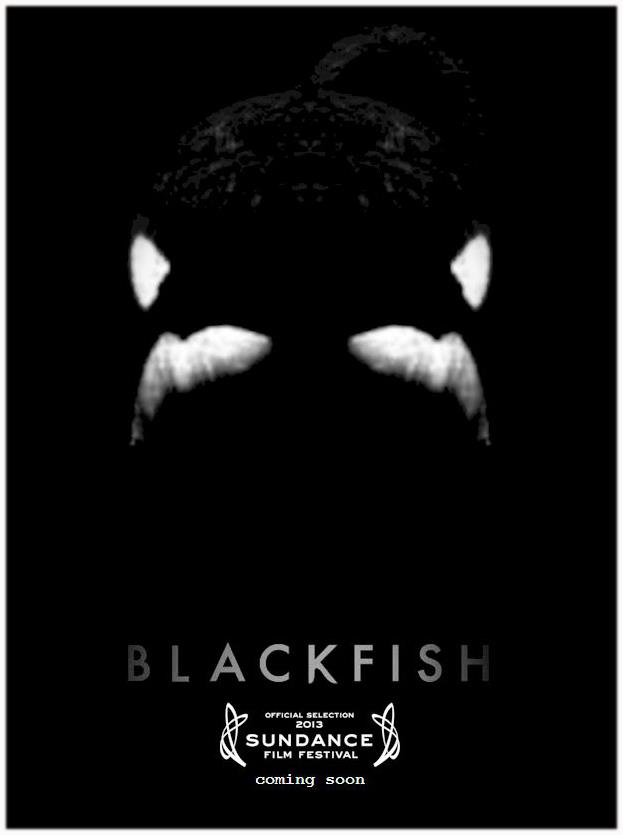
Sundance London 2013: Blackfish Review

Director: Gabriela Cowperthwaite

Synopsis: A chronicle of Tilikum, a killer whale captured and trained at SeaWorld, that killed several trainers in captivity.

The vast ocean is home to millions of creatures – some harmless, and others extremely dangerous. Whilst the Orca whale has not been known to harm many humans, Blackfish aims to show that in an unnatural environment, they may be prone to shake up the statistics.

The 30-foot-deep tanks at SeaWorld at Orlando, Florida apparently hold many secrets. In Gabriela Cowperthwaite’s documentary we are privy to the murky depths of those tanks and the horror that happened several times within them. Starting off with footage of what you believe to be an attack, Cowperthwaite illustrates the tension that courses through the film right from the beginning.

Arranged with talking head interviews, illustrated depictions of court cases, and collections of incredible footage, Blackfish glides through its run time, as elegantly as some of the Orca performances. To watch the whales is enjoyable enough, but with the added danger that attracts the “killer” connotation, you are captivated. Tilikum is a mysterious focal point, forever surprising both you and those that had the (mis)fortune of being in his company. Much like Nim in Project Nim and the grizzlies in Grizzly Man, there’s no telling to how the fierce creature will behave – waiting for the assumed action constantly has you on edge.

One misjudgment, perhaps, is the lack of discussion about Dawn Brancheau, the third victim. Dawn’s death bookmarks the film and as the biography of Tilikum advances, we realise that Dawn’s death is soon to be upon us. Having seen an array of footage where Tilikum lashes out, there is the thought that we will see something of Dawn’s demise. It’s part-morbid curiosity, part-expectation (after witnessing quite a lot of horrifying footage) that we’ll see something of the attack. The lack of footage and the short eulogy of Dawn subtracts from some of the predicted poignancy. More empathy can be found in the tragic story about a trans-atlantic trainer, Alexis Martínez, who was also killed by a captive Orca.

There is also little suggestion about how to better - or eliminate – the cruel confinement of the resort whales. Despite this minor flaw, however, there is plenty of material to shock and disgust you about the situation – in a way,  Cowperthwaite’s smart way to avoid spoon-feeding you a boycott message. You will leave Blackfish surprised and stunned by all that is shown, and definitely with your own developed opinion that SeaWorld, Marineland, Loro Parque et al need to be closed down.

Helped by an eloquent score from Jeff Beal and Cowperthwaite’s fine-tuned direction, Blackfish can be extremely affecting at times. The unpredictable nature of these types of mammals and the strange connection people have with them (where death is nearly always at your door) continually makes for an interesting documentary. Blackfish may not stay with you as long as Herzog’s Grizzly Man manages to, but there’s no doubt that you’ll ever forget the footage and the emotion behind the story.

****
By Piers McCarthy. Also posted on LiveForFilms

Saturday, 12 January 2013

Samsara Review


Director: Ron Fricke

Synopsis: Samsara casts a beautiful light on 25 countries and the stories and landscapes of each.

Nearing the first hour of Samsara director Ron Fricke shows us a series of assembly-lines. Disturbing in some senses (the sheer monotony of the job or the slaughter of chickens, cows and pigs), they are also hypnotic sequences. They are followed with an ironic look at supermarket shopping and fast-food consumerism and subsequently by presentations on the body, surgery, air-dolls and then strippers. It highlights the structure of the documentary in its awareness of universal parallels. Furthermore, from shining a light on the minutiae of life, it implores you to look at the art of it.

In its entirety, Samsara is a glorified screensaver (by no means a negative) – a series of moving pictures that are there purely to be looked at. If cinema is based on the notion of watching, this film embodies that concept better than most. For one hour and forty minutes Fricke presents the most striking features about the world around us. Some shots come and go without you taking much notice but the majority of what has been shot on the 75mm camera warrants every bit of your attention. 

There are too many to list although special mention must go to the Chinese formations and synchronised prayer rituals photographed with as much meticulous detail as the group movements themselves. Much like the assembly lines, there is an allure to the uniformity. Some parts are quite disturbing, like one showing a man transform himself into a creature closely resembling that of the Pale Man in Pan’s Labyrinth. On the whole, however, it is a suitable feature for families – an educational and eye-opening depiction of life.

Some viewers may switch off after only a few minutes, realising there is no narration or narrative and only the image and soundtrack to dictate any emotion/impetus. Nevertheless, ignore for a brief amount of time the conventions of regular cinema and you will be transported into numerous cultures, all with their own eccentricities and beauties. There would also be many reasons for revisiting the documentary after its initial viewing; trying to work out the locations for each segment is not an easy task but certainly an interesting one.

***
By Piers McCarthy. Also posted on Flickering Myth

Thursday, 15 November 2012

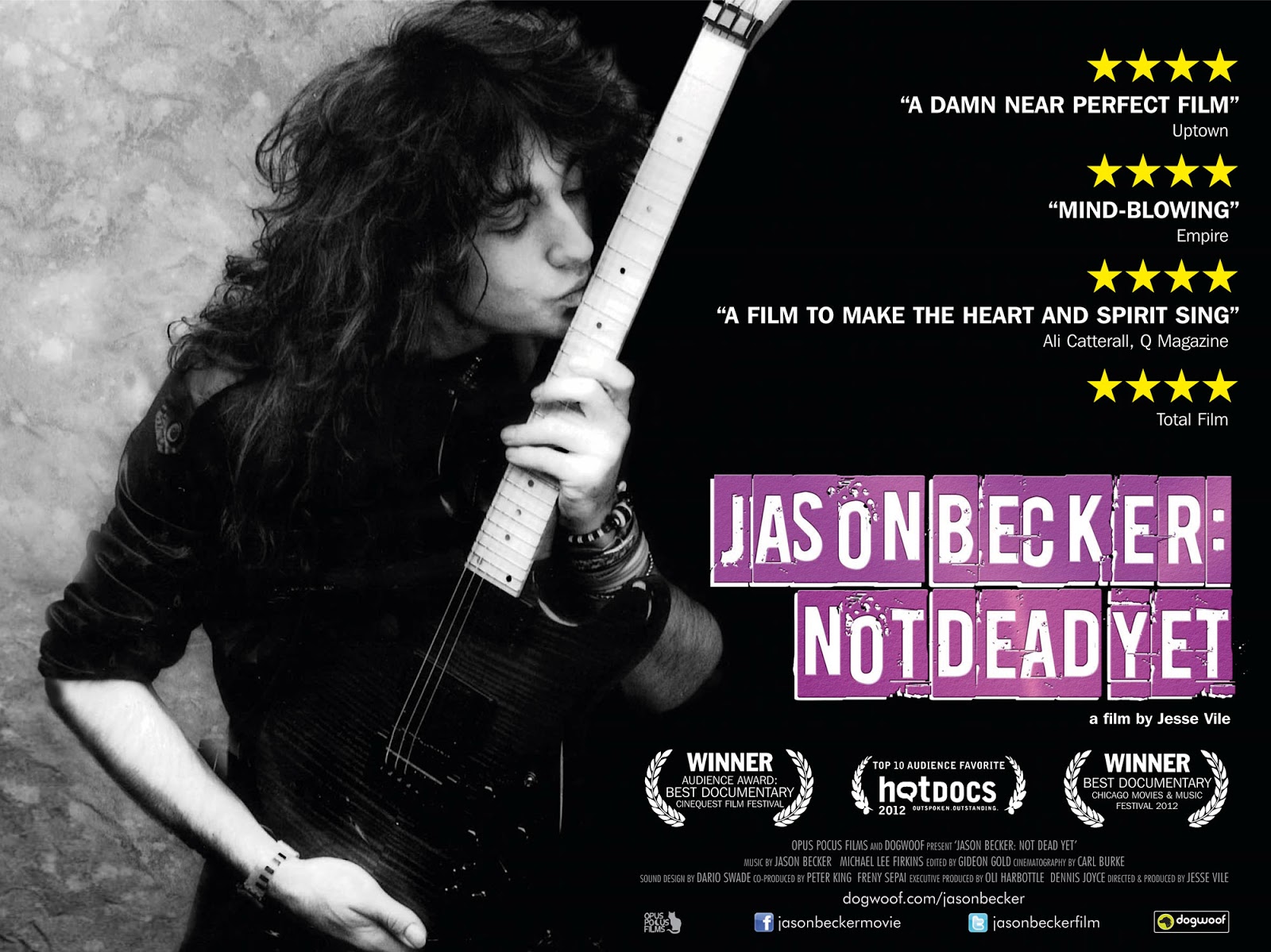
Jason Becker: Not Dead Yet Review


Director: Jesse Vile

Starring: Jason Becker, Ehren Becker, Gary Becker, Steve Vai, Joe Satriani, Marty Friedman

Synopsis: Jason Becker was an extraordinarily talented guitarist whose skill caught the attention of the rock world. As his stardom grew Jason’s health declined and within a few months of becoming part of David Lee Roth’s new band, Jason was diagnosed with ALS (also known as Lou Gehrig’s Disease). Jason still lives, 22 years after his initial diagnosis, and continues to write music through special computer software.

Documentaries are a thriving form at the moment, with a string of successes including Senna, The Imposter, Searching For Sugarman and Crossfire Hurricane. With the internet allowing for more extensive research, this type of filmmaking is fast becoming a popular starting point for directors and writers. One such upstart is Jesse Vile, an industry mogul once part of the Raindance Film Festival, bringing his directorial debut, Jason Becker: Not Dead Yet to audiences all around the world. It focuses on the very talented Jason Becker, a guitarist with an innate skill for music. Some, who are not aware of the entire story, may be deterred by the first part of the film that looks at Jason’s abilities. It is easy to think that the documentary is purely about the rise of an adroit guitarist. Give it time and the story changes dramatically, leading to a tale that is enriching and distressing. Music fans will be won over by the documentary – you do not have to have to be a fan of Jason’s music or shred-guitar style – as it promotes the purity of music and what it can do for a person. Those not partial to music can still take something from Not Dead Yet though may not respond to all of its messages.

Bookended with a fuzzy home video recording of Jason and his uncle playing “Mr. Tambourine Man”, the jovial nature of the eponymous guitarist is never forgotten. With the grave matter of Becker's terminal disease, this documentary could have become a grim depiction of a life half lived. Instead, with loving zeal, Jesse Vile and the friends and family of Jason honour a life lived to the fullest. Vile's structure and pace of this documentary is expert - chronicling the years of practice and play, up until the moment of standstill which then gradually evolves into a story of the strength of human spirit.

Set out in a three-act structure, Vile compiles an extensive and deeply-personal account of the ill-fated Becker. The first two acts give you an idea of Jason’s personality and enthralling expertise through archive footage and interviews from friends and family. Sadly, ALS has left Jason unable to speak yet in the third act we still have chance to hear his thoughts as he communicates through the “vocal-eyes” technique devised by his father. These scenes are incredibly interesting and wondrously illustrate the methods used to allow Jason to still interact with people. How Jason remains active is phenomenal; his familial aid (along with his ex-partner’s care) is heart-warming and educational. It is a shame that the third act runs so short that scenes like this are not extended, giving you a fascinating, if brief, look at the juxtaposition of paralysis and pursuit.

Vile’s talent at storytelling has not been explored to the fullest yet (this being his first feature) though it’s clear that he has been educated on the art-form. He unearths a ton of material on Jason to begin with, showing the gradual ascent to stardom; on their own these elements would appear dull and may not emphasize the affability of Jason, so Vile underscores them with candid interviews. Friends and family are questioned in an assertive, yet supportive manner – enabling the viewer to hear stories about the highly private aspects of Jason’s life without it seeming exploitative. Vile needn’t depend on clichéd customs when it comes to generating empathy, he relies on the audience having a heart and responding to his depiction of Jason’s life.

Jason Becker: Not Dead Yet is a sweet, informative and poignant documentary – one of the best of the year. It centres on a charming figure whose determination to live his life, despite damning circumstances, is astoundingly strong. Life-affirming and memorable, and something to recommend to all your friends and family.


****
By Piers McCarthy. Also posted on Flickering Myth. Interview with director here.

Monday, 29 October 2012

LFF: For No Good Reason Review


Director: Charlie Paul

Starring: Ralph Steadman, Johnny Depp, Richard E. Grant, Terry Gilliam, Hunter S. Thompson, Jann Wenner

Synopsis: A documentary about Ralph Steadman, the artist behind many Hunter S. Thompson illustrations, along with decades of unique and revolutionary artwork.

The Gonzo visionaries were famous mainly for all the wrong reasons; they defied convention, acted out unmorally and set daring new trends. Ralph Steadman was one such visionary whose work has, up until this day, provoked millions of people. In Charlie Paul’s documentary, the genius and novelty of Steadman’s work is sought to be explored.

Paul brings along Johnny Depp (a close friend of Steadman and his notorious partner, Hunter S. Thompson) as interviewer/narrator, making this film seem like a project among friends (also giving it a commercial boost). In this regard the niceties of close companionship fog the more introspective aspects of documentary filmmaking. Fortunately, with Steadman feeling comfortable with Paul and Depp, he does delve into some more personal recollections, though maybe not as often as one would hope. It succeeds in foregrounding a figure many may not know of – a name that only appears at the bottom of his art, without any indication of his personality – as well as detailing the style of his strange yet beautiful art.

Steadman rose to fame when he was employed to work alongside Hunter S. Thompson to illustrate Hunter’s articles and book. This relationship is, as one expect from knowing about the infamous Gonzo journalist, was chaotic. It had its ups and downs throughout the adventures the pair had together – something Paul focuses on heavily. With Hunter being such a larger-than-life figure, the documentary does become fixed on him in parts. It’s something that is perhaps unavoidable but does make you pine for more material and anecdotes about Hunter, fatefully putting Steadman in the corner.

Thanks to Steadman’s time in Hunter’s company he has developed a sharp and wicked wit that, for when he gets his limelight, elevates his profile. He isn’t just some pale and crotchety artist who lingers by the side; he has an intense voice and morale that justifies a film about him. Moving past Hunter, we hear and see Steadman in the company of Richard E. Grant, Terry Gilliam and William Burroughs. He has lived a fascinating life in the company of great artists (much like himself), educated through each experience and meeting.

Steadman’s interests lie not only in art but political activism. The two endeavours are collected in a great montage that flicks through dozens of drawings – some animated at points – giving another life to the works of a smart and creative set of art. It’s a moment that sets you in great awe of the man – there are literally hundreds of drawings, all with a unique flavour.

Not only exposing the agenda and history of Steadman, the film must magnify that distinctive flair; it does in sections of the film, and they are among some of the most seminal sequences of the documentary. Watching Steadman work is a thrill. Many documentaries about artists flash through their life and merely present to you the final piece, in For No Good Reason the process is explored. The smears and harsh splatters of Steadman’s brush reflect a realm of emotions and messages. As Steadman paints a few new pieces he runs his own commentary over what a certain flick of the brush, or what a change in colour, may mean. What’s more, he reveals the technique of his design that for artists is exceptionally enchanting.

All great documentaries implore you to seek out the work of the person in focus and this film achieves that. You leave the cinema determined to read the stories Steadman illustrated, find the collections and even try your hand at some of the art. There is only a niche demographic for For No Good Reason which, whilst distressing, is perfectly understandable for a film about the wacky Gonzo personalities.


***
By Piers McCarthy. Also posted on LiveForFilms

Saturday, 27 October 2012

LFF: Crossfire Hurricane Review


Director/Writer: Brett Morgen


Starring: Mick Jagger, Keith Richards, Charlie Watts, Ronnie Wood, Bill Wyman, Mick Taylor, Brian Jones


Synopsis: A documentary chronicling The Rolling Stones – from their humble beginnings to their 50th anniversary.


It has been a fantastic year for British institutions – the Royal family celebrated a diamond jubilee and a wedding, Britain swept the board at the Olympics, and James Bond turned 50. Aside the televised and cinematic commemorations, the music of The Rolling Stones floated through the air waves of countless radio stations in light of their 50th anniversary. The Greatest Rock and Roll Band are back and to honour their decades of hits, a come-back was enthusiastically announced and a new documentary, Crossfire Hurricane, has been made to tell their story.


Documentaries on The Rolling Stones are a dime a dozen yet Crossfire Hurricane boasts the exclusive productive partnership of each member (discounting the late Brian Jones). The headline treatment of Jagger, Richards, Watts, Wood, Wyman and Taylor’s input appears like a salacious pull for this film, however, the audio-only interviews are disappointingly infrequent and only moderately insightful. To have each Stones member giving their two cents about their time in the band should warrant near-interrogative questioning from Morgen. Alas, the director conducts his Q&As with a distinct lack of fervour; he rarely probes into the thoughts of the rock stars, leaving you with nothing new to reflect upon.


Fans of the Stones can watch Crossfire Hurricane and see new behind-the-scene footage, but learn nothing new beyond that. The said footage has been closeted for good reasons, mainly due to the tawdry quality of it. The remaining scenes are recycled videos and newsreels seen dozens of times – all suffocating what should be introspective interviews. Many television and radio programmes from this year, that have told the same story, utilized the significant Gimme Shelter recordings along with the same snippets from infamous concerts, making this documentary insufficiently original. On occasion, Crossfire Hurricane gladly gives you information repressed up until now (quick notes on their “exile”, testimony from Charlie that he follows Keith’s lead guitar, and confessions about relationships over the years) though these are few and fleeting.


Every member of The Rolling Stones has (and had) an electric personality that deserves attention. Brian Jones, in particular, had such a sadly short life – most of it spent in The Stones – and a memorable personality that many want to learn more about. Crossfire Hurricane’s main strength is talking about Jones at some length, with additional remembrances from the band. Keith’s recollections are beautifully illustrated by personal photographs showing the two laughing and joking around, highlighting the brotherhood of the band with tremendous poignancy. Despite Morgen favouring TV and tour clips instead of explorative interviewing, the documentary still has the ability to instil a sense of adulation and respect for The Stones – Jones’ quasi-eulogy certainly helps in this regard.


With half a century of stories, Brett Morgen foolishly dwindled down the extensive history of The Rolling Stones to a 111 minute documentary. Had this material been in the hands of someone like Martin Scorsese (a huge fan of The Stones and director of previous documentary/live gig Shine a Light), and perhaps broken up into two or three parts, this would constitute as the ultimate chronicle of the band. Ronnie Wood – a key member since 1975 – is only given scraps of screen-time to tell us about his part. Furthermore, post-1975 is barely spoken about, reminding you that Crossfire Hurricane should have had the subtitle “Part 1” attached to the project title.


***
By Piers McCarthy. Also posted on LiveForFilms

LFF: The Central Park Five Review

Directors/Writers: Ken Burns, Sarah Burns, David McMahon

Starring: Kevin Richardson, Raymond Santana Jr, Kharey Wise, Yusef Salaam, Antron McCray, Jim Dwyer

Synopsis: A documentary exploring the “Central Park jogger” case about the rape and assault of a young woman supposedly by five young boys. Focusing mainly on the mistakes made in the case and the false accusations against each boy.

In 1989 the “Central Park Jogger” case was one of the biggest news stories in America. It overshadowed any other crime cases (as mentioned by some of the interviewees) and took weeks of interrogation until 5 innocent boys were charged with the crime. In 2002 a convicted serial rapist, Matias Reyes, spoke to one of the convicts in prison and vowed to vacate the 5 boys’ (now men) convictions by confessing to the crime. It is an interesting and long-spanning chain of events that makes this documentary very insightful.

The three filmmakers get interviews with each of the 5 sentenced men and, one by one, recall and analyse the poor validity of their conviction. The only member of the Central Park Five we don’t see is Antron McCray who preferred not to be filmed; the rest of the group are graciously given plenty of screen time. They are an interesting bunch of personalities, all matured by their traumatic experience in their mid-teens, who garner a great deal of empathy.

It is a very scrutinising look at this historic case and kudos to Ken and Sarah Burns and David McMahon for compiling extraordinary research and material (photographic, print or film). Anyone unaware of this event are given detailed descriptions of what was thought to have happened and what actually did. The alternating sides of the story – news footage from 1989 and 1990 countered with testimonies from today – generate a fantastic diagram of right and wrong. The impetus of this documentary is to highlight the intermittent unjust procedure of law, which is does to fine effect. You can often see the Central Park Five welling up in tapes from back then and from today, making you very aware of their unwarranted punishment.

Incidents like this happen all-too-often; Central Park Five vindicates the in depth analysis of a case rather than the mob-culture uproar that leads to hasty and tawdry investigations. The directors do not just focus on the boys’ discriminatory treatment from the police, but the entire New York state (branching out to the entire country and beyond at points). It serves to reflect the frightening sensationalist aspect of some crimes, and the shocking aftermath.
It is overwhelmingly exhaustive in its aim to educate you on this infamous story (albeit, running slightly too long in sections). The fear that this can happen is made intensely aware by the statement: “Confessions will trump DNA; confessions will change witnesses’ testimony; confessions are irresistibly persuasive and almost the effects can’t be reversed.” The spoken word is a powerful tool in any means of life and whether or not it’s truthful, it can have a striking effect. Central Park Five implores you to think before you judge as under the surface of this trial in 1989/90 were five scared young boys who had done nothing wrong. It is a timeless piece of filmmaking that would serve as a great argument for cases similar to this.

***
By Piers McCarthy. Also posted on LiveForFilms

Friday, 5 October 2012

LFF: Beware of Mr. Baker Review


Director/Writer: Jay Bulger

Starring: Ginger Baker, Eric Clapton, Charlie Watts, Stewart Copeland, Carlos Santana, John Lydon, Jay Bulger

Plot: A documentary chronicling the life of legendary drummer, Ginger Baker. 

Rock and roll documentaries seem to be flourishing at the moment with recent hit Searching for Sugarman and upcoming films, Jason Becker: Not Dead Yet and Rolling Stones: Crossfire Hurricane. Now with Beware of Mr. Baker, there’s even more material to educate and surprise you about the world of music. Mr. Ginger Baker was the drummer for Cream, Blind Faith, Masters of Reality and The Graham Bond Organisation (to name a few) and one of the greatest of his profession. His legend and persona is perhaps only known with hardcore rock ’n’ roll fans and those born after the 1940s, but this documentary aims to highlight his legacy and to remind the world of his influence.

To walk out of this documentary and eventually forget the image, voice and attitude of Ginger Baker is near-impossible. Director/writer Jay Bulger prods and picks at Baker and his history with such determination so as to keep both Baker and his legend alive and kicking. Often Bulger pokes too hard and the opening sequence of Baker whacking the interviewer’s nose with his metallic cane informs the audience of the vivacity of the subject – a well-travelled man with a wealth of stories, opinions and aversions.

Bulger’s spirited zeal to chronicle Baker’s life is fantastic for the audience wanting to learn of this drummer’s life and to allow for a plentiful amount of quips from Baker (his almost-constant hurl of questions and insults at the young interviewer is incredibly funny and extends to a separate montage during the end credits). Even with a lifetime of alcohol and drug-abuse, Baker still has plenty of witty remarks and a superb memory for his days of superstardom and gradual decline. The line of questions relating to his young life, his introduction to the drums and his famous ascent to celebrity status are punctuated expertly with parallel interviews from Baker’s closest companions (including Eric Clapton, Jack Bruce and his first wife Liz Finch) and an incredible array of talking heads including Charlie Watts, Stewart Copeland, Carlos Santana and John Lydon, all giving their two cents about the great Ginger.

Ginger’s life story is not just told with the static view of him slouching in his seat, eyes concealed behind darkly tinted sunglasses, but with animation and colour thanks to David Bell’s illustrations and the archive footage and photographs. It seems commonplace to animate old tales with no pictures or video to accompany it (American: The Bill Hicks Story and Searching For Sugarman adopt that style); Beware of Mr. Baker incorporates a dynamic tone not only from Baker’s persona and stories but also with those striking images to compliment Baker’s dialogue.

It is fascinating to see a man’s sinuous journey through life and admirable for a man who practically achieved what he wanted to achieve. It’s clear to see how many people Ginger Baker influenced along his way from the barrage of celebrity praise, and by Bulger’s own deep-rooted interest into finding out about the loose lunatic. Baker is a tough man to like by the end of the film – his manner has clearly set him back socially, financially, and health-wise – but for those willing to look past the man’s demons, you will find a great deal of talent and an odd charm.  Beware of Mr. Baker is an absorbing, fierce gem of a film that is a must-see for music fans.

****

By Piers McCarthy. Also posted on LiveforFilms